Super Bowl XIV: Steelers Cement Their Dynasty in a Blue-Collar Showdown
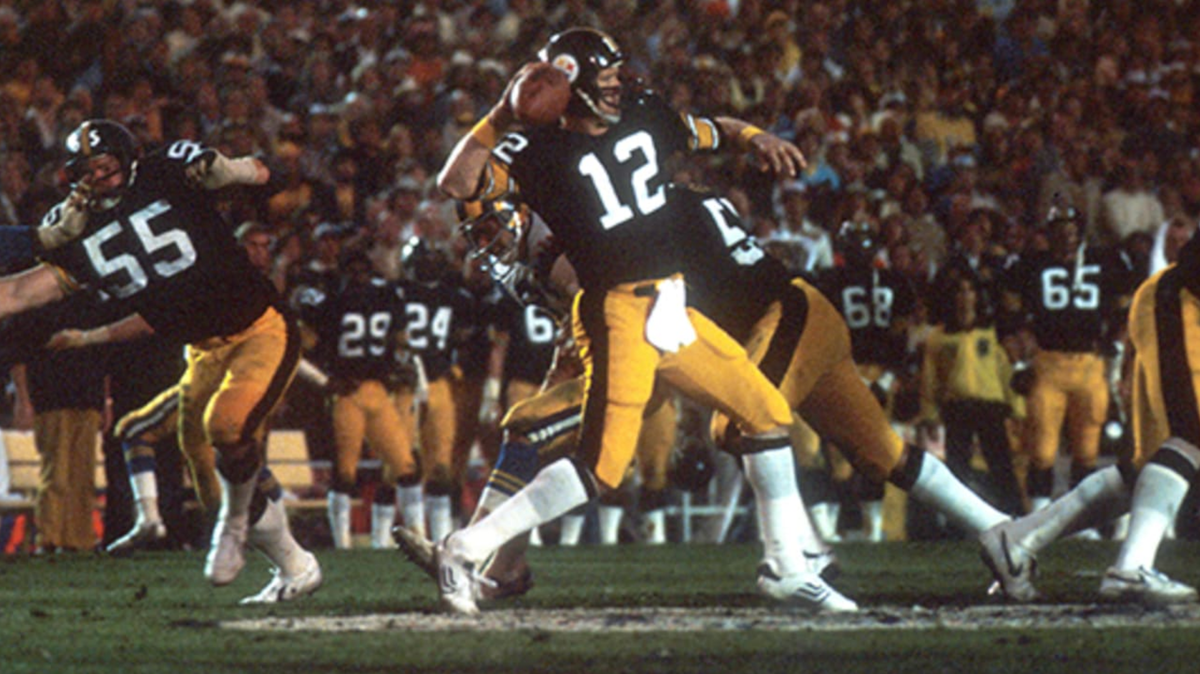
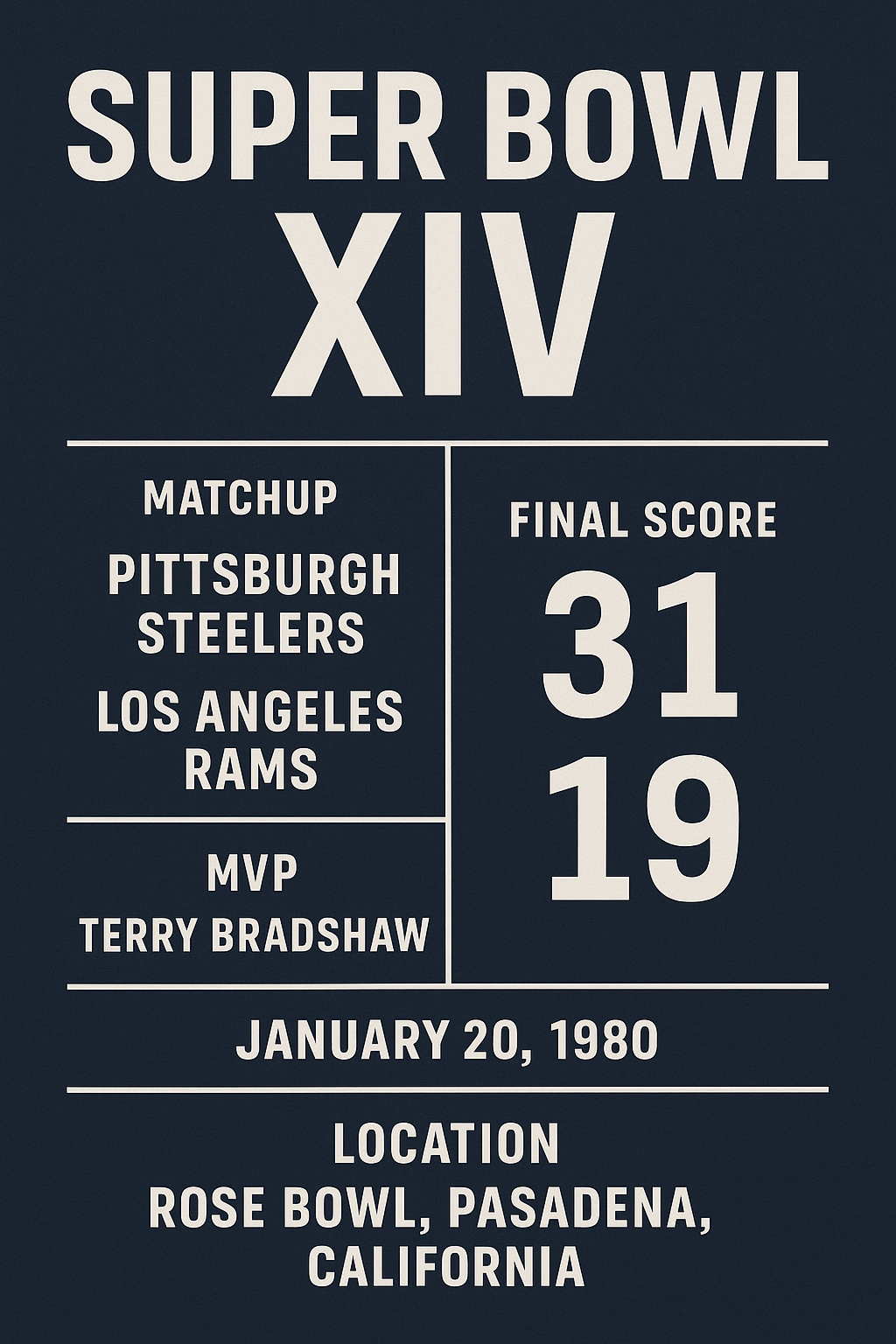
On January 20, 1980, the Pittsburgh Steelers entered Super Bowl XIV not only as defending champions, but also as the NFL’s resident dynasty-in-the-making. Held at the Rose Bowl in Pasadena, California, this showdown against the upstart Los Angeles Rams proved far more competitive than the odds makers had predicted. The Steelers were gunning for an unprecedented fourth Super Bowl title, and the Rams—playing essentially a home game—were looking to shock the football world.
What unfolded was a battle of experience versus resilience, grit versus flair. And in the end, Pittsburgh’s battle-tested lineup and calm under pressure proved decisive. Super Bowl XIV not only solidified the Steelers’ place in NFL history, but also produced a game rich with dramatic turns, iconic plays, and a glimpse into the future of professional football.
Setting the Stage: A Clash of Opposites
Heading into the game, the storyline was clear. The Steelers, led by head coach Chuck Noll, were appearing in their fourth Super Bowl in six seasons. With a roster loaded with Hall of Famers—Terry Bradshaw, Lynn Swann, John Stallworth, Franco Harris, Joe Greene, Jack Lambert—Pittsburgh embodied the rough-and-ready football ethos of the 1970s.
On the other side, the Los Angeles Rams were 12-point underdogs, the biggest spread in Super Bowl history at the time. They had posted a modest 9-7 record, the weakest regular-season record ever for a Super Bowl participant up to that point. They had gone through three quarterbacks during the season and entered the championship with the 36-year-old Vince Ferragamo, who had only started a handful of games.
Despite their underdog status, the Rams came prepared, bringing a rugged defense and a strong running game led by Cullen Bryant and Wendell Tyler. The game would not be the blowout many predicted. In fact, the Rams led after three quarters—something no other team had managed against the 1970s Steelers in a Super Bowl.
“Super Bowl XIV was a perfect encapsulation of what made the Steelers great—not just their dominance, but their ability to dig deep when the moment demanded it,” says James Carter, curator at the Super Bowl Historical Society.
First Half: Rams Shock the Crowd
Over 103,000 fans packed the Rose Bowl—a record-setting Super Bowl crowd—expecting Pittsburgh dominance. But the Rams struck first. After trading field goals, the Rams executed a daring 50-yard flea-flicker pass from Ferragamo to wide receiver Billy Waddy, setting up a short touchdown run by Cullen Bryant. The Rams took a surprising 13–10 lead into halftime.
Despite trailing, the Steelers remained calm. Bradshaw, known for his gun-slinging confidence and unshakable poise, had already connected on a touchdown pass to Lynn Swann, and the defense had limited Ferragamo’s effectiveness outside of a few big plays.
Still, the Rams were playing like they belonged—and that in itself was stunning.
Third Quarter: Momentum Swings
The Steelers struck quickly in the third. On their first possession, Bradshaw hit John Stallworth for a 47-yard touchdown, showcasing their big-play capability. But the Rams answered back. On the ensuing drive, they marched methodically downfield, capping it with a 1-yard touchdown run by Lawrence McCutcheon—on a halfback pass from Ron Smith. They were now up 19–17 entering the final quarter.
It was the first time in history that the Steelers trailed after three quarters in a Super Bowl. Their dynasty—built on defense, precision, and clutch moments—was in real jeopardy.
“What people forget is how close the Rams came to pulling this off. That fourth quarter was less about X’s and O’s and more about legacy,” said Angela Moss, senior analyst at the Super Bowl Historical Society.
Fourth Quarter: Championship DNA
Great teams don't panic. The Steelers, with their championship pedigree, knew it was time to rise. Early in the fourth, the defense forced a crucial turnover when linebacker Jack Lambert intercepted a Ferragamo pass in the red zone. The turnover flipped the momentum instantly.
Just moments later, Bradshaw uncorked a deep pass to Stallworth, who beat double coverage for a 73-yard touchdown. The play—arguably one of the greatest in Super Bowl history—put Pittsburgh back in the lead, 24–19.
From there, the defense clamped down. The “Steel Curtain” came alive, sacking Ferragamo and disrupting any rhythm the Rams tried to build. With under two minutes left, Franco Harris punched in a touchdown to seal the deal, bringing the final score to 31–19.
Final Score
- Pittsburgh Steelers: 31
- Los Angeles Rams: 19
The win made Pittsburgh the first team in NFL history to win four Super Bowls, all in the span of just six seasons (1974, 1975, 1978, 1979).
MVP and Notable Performances
Terry Bradshaw was named Super Bowl XIV MVP, becoming just the second player at the time (after Bart Starr) to win back-to-back Super Bowl MVPs. He finished with:
- 309 passing yards
- 2 touchdowns
- 3 turnovers (2 INTs, 1 fumble), but rose above them when it mattered most
Other key contributions:
- John Stallworth: 3 receptions, 121 yards, 1 TD
- Franco Harris: 44 rushing yards, 2 TDs
- Lynn Swann: 5 catches, 79 yards, 1 TD
- Jack Lambert: 14 tackles, 1 INT
The performance by Stallworth in particular was praised as a defining moment in his Hall of Fame career. His 73-yard touchdown reception was the longest pass play in Super Bowl history at the time.
Strategic Takeaways
From a coaching perspective, Chuck Noll’s calm leadership proved crucial. He resisted the urge to abandon the run despite trailing, and his confidence in Bradshaw’s deep ball eventually paid off.
Defensively, Pittsburgh played a bend-but-don’t-break game, keeping the Rams out of the end zone in key moments and capitalizing on turnovers in the fourth quarter.
The Rams, though ultimately unsuccessful, won the respect of fans and analysts alike. Ferragamo played admirably, the defense held for three quarters, and head coach Ray Malavasi called a brave, imaginative game.
Cultural and Historical Impact
Super Bowl XIV was the final chapter in the Steelers’ 1970s dynasty. Although Pittsburgh would remain competitive through the 1980s, they never returned to the Super Bowl under Chuck Noll.
More importantly, Super Bowl XIV marked a turning point for how America viewed football dynasties. It validated the concept that sustained excellence over many seasons could be achieved in the modern NFL. With free agency and injuries becoming more prevalent, the feat of winning four titles in six years remains unmatched.
For the Rams, it was a missed opportunity, but the foundation was laid. Within a decade, they would move to St. Louis and eventually claim their own Super Bowl in 1999.
Broadcast and Entertainment
Super Bowl XIV was broadcast on CBS, with Pat Summerall and Tom Brookshier providing commentary. The halftime show featured performances by Up with People, who presented a themed medley titled “A Salute to the Big Band Era.”
The game drew over 76 million viewers, further cementing the Super Bowl as the most-watched television event in America.
Legacy: What Made Super Bowl XIV Special
What separates Super Bowl XIV from other title games is its narrative tension. It wasn’t a blowout. It wasn’t a fluke. It was a fiercely contested game where the best team rose when it counted most.
The victory gave the Steelers more than just a fourth Lombardi Trophy—it gave them mythic status.
Bradshaw, previously mocked for his accent and perceived simplicity, was now a two-time MVP. Stallworth and Swann became the NFL’s gold standard for wide receiver duos. The Steel Curtain was no longer just dominant—it was legendary.
Even today, NFL Films regularly ranks Super Bowl XIV among the Top 10 Super Bowls of All Time.
Final Word
Super Bowl XIV may not have had the flash of later championships or the historic upsets of earlier ones, but for purists and historians, it stands as the culmination of a dynasty and the essence of championship football. It was a game won not just with talent, but with heart, experience, and the kind of pressure-tested fortitude that defines greatness.
The Rams fought valiantly and made it one of the most underrated Super Bowls in history. But in the end, it was the Pittsburgh Steelers—veteran, violent, victorious—who walked off the field having written their names permanently into the book of football immortality.